Sprints (short work cycles)
The backlog never ends; a sprint does.
- Multilingual, LTR and RTL
- Free to start, no upfront payment
- Secure online payment
Problem and solution
A team committed to everything delivers nothing.
01 The problem
Without a set timeframe, new work keeps cutting in and “important” changes every day. Progress is neither compared with the last cycle nor teaches anything for the next one.
- Newly arriving work breaks the cycle’s focus.
- Without a timeframe, you have no measure of the team’s real velocity.
- The cycle’s goal has no clear link to the task list.
02 Taskie's answer
Every cycle a goal, every goal an end
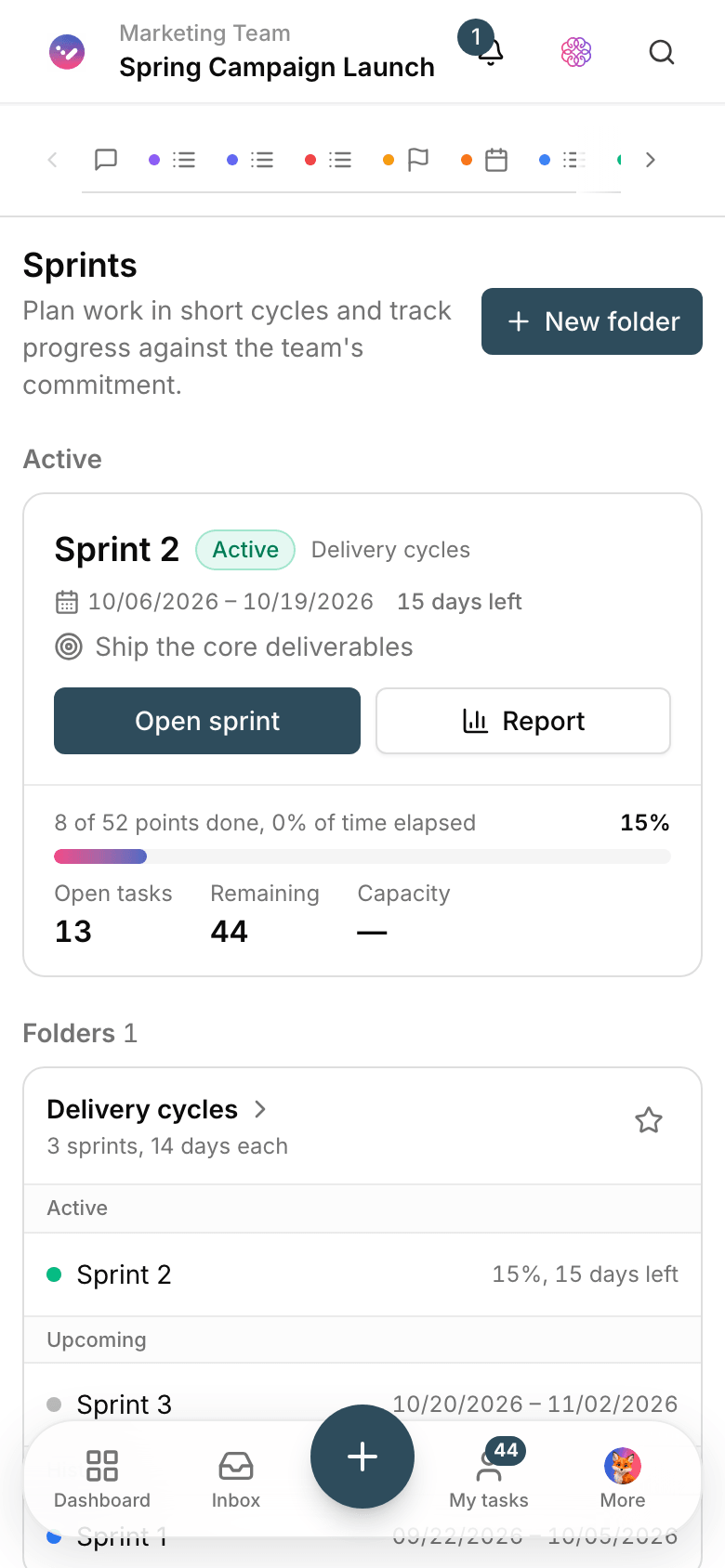
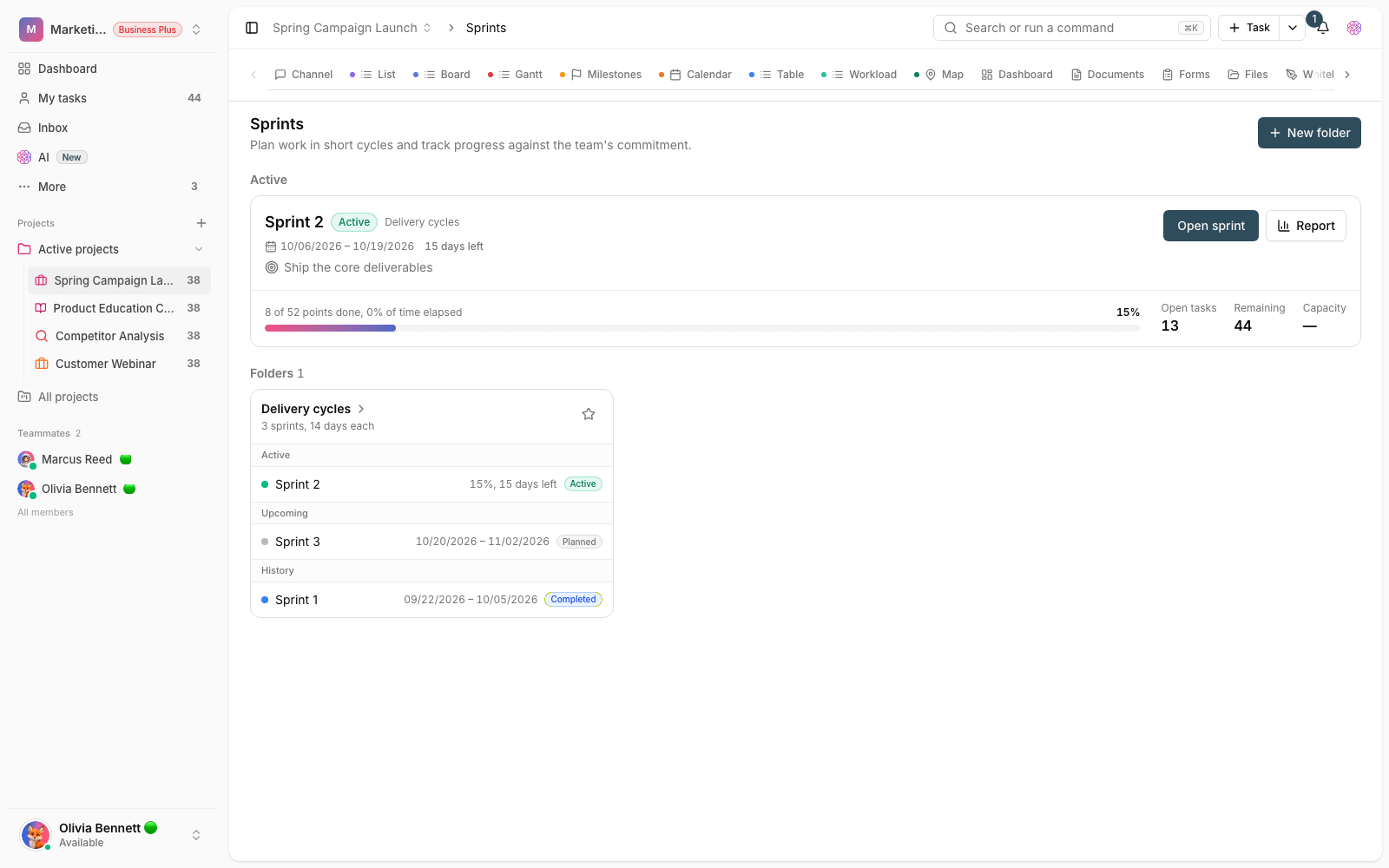
Create a sprint with a timeframe and a goal and pull tasks into it from the backlog. During the cycle progress is in plain view, and the end of the cycle is the team’s real report card.
- Set each sprint’s timeframe, goal and capacity.
- Pick the cycle’s tasks from the same project’s backlog.
- Track the cycle’s progress in views and on the kanban board.
Workflow
Two weeks that add up
Set the cycle goal
The team decides which important outcome this cycle is working toward.
Pick the tasks
Tasks aligned with the goal move from the backlog into the sprint; the rest stay out.
Focused execution
The team works on that fixed list and sees progress every day.
End-of-cycle review
The team reviews what got done and what didn’t with real data, and plans the next cycle more precisely.
Outcome
Sprints in practice: what actually changes?
Real two-week focus
The team has a fixed list; “just this one task” no longer cuts in mid-cycle.
A transparent commitment for all to see
Everyone knows what the team promised this cycle and where it stands now.
Reviews based on data, not gut feel
At the end of the cycle it’s clear what happened and what didn’t, so the next plan is more realistic.
In sync with the rest of Taskie
Sprints work with the views, kanban boards and goals of the same workspace.
- Cycle goal
- 1
- Every sprint has one main goal so the team’s focus doesn’t splinter.
- Cycle list
- Fixed and clear
- The cycle’s tasks are known from the start; new work goes to the backlog, not mid-cycle.
- Cycle review
- With real data
- The cycle’s report card is built from the real status of tasks, not meeting memories.
Use cases
Put Sprints to work in these situations
Product development
Bugs and features are planned in short cycles and delivered steadily.
Marketing teams
Each campaign cycle’s output is clear in advance and measured at the end.
Continuous operational improvement
Corrective actions are planned cycle by cycle and their impact reviewed.
FAQ
Questions about Sprints
Our team doesn’t do Scrum — are sprints still useful?
Yes. A sprint in Taskie simply means a short work cycle with a clear goal and list — that’s it. Any team that wants to take “these two weeks” seriously gets results from it; you don’t have to run Scrum.
What do we do when urgent work arrives mid-cycle?
Bring truly urgent work into the cycle as a conscious decision and move something else out; the rest goes to the backlog. The difference is that the swap is visible and recorded.
How long should a sprint be?
You set the timeframe; most teams start with one or two weeks. A shorter cycle means faster feedback; if reviews have little to say, make the cycle longer.
Related features
Alongside Sprints, explore these too
Tasks
Work is scattered across chats and meetings; nobody knows who owns what or when it’s due.
View detailsViews
Everyone reports with their own filter; two people see the same project two different ways.
View detailsAutomations
The same few manual steps repeat every day, and once a week one of them gets missed.
View detailsStarting today, move your team's work forward in one workspace
- Set up in minutes
- Start with no upfront payment
- Support from real people