
What goals and OKRs are and when to use them
Goals define your team's measurable outcomes, with owners, a due date, an OKR cycle and progress that's calculated automatically.
Tasks say what work gets done, but not why. A goal is the "why": the outcome your team wants to reach, along with a measure that shows how close you are. In Taskie, goals are used to define measurable outcomes, clear ownership and OKR cycles.
Open the Goals page from the sidebar. There you can see the number of active and completed goals and your workspace's average progress at a glance.
How a goal is structured
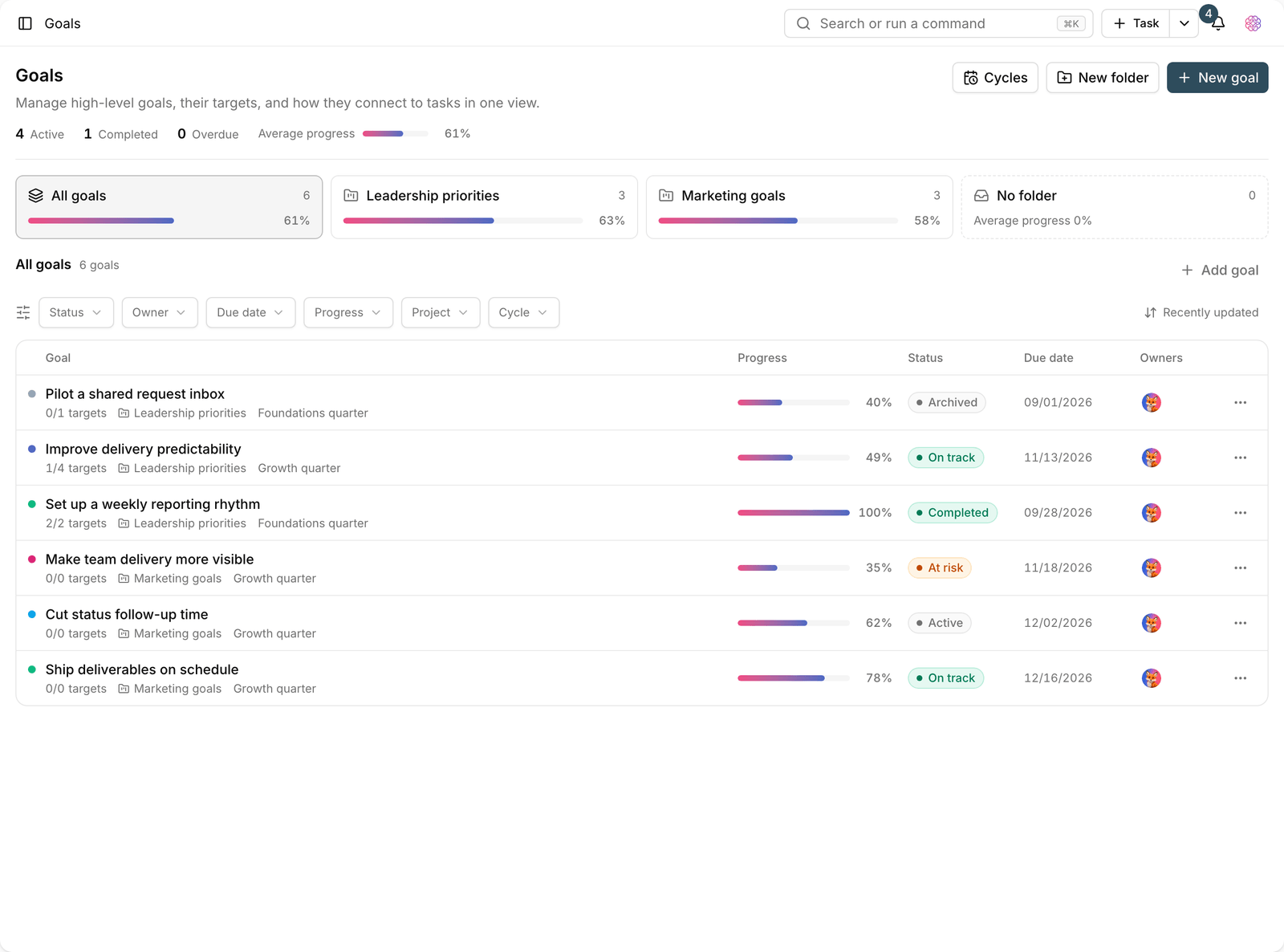
- Name and description: the outcome you want to reach, not the activity you'll do.
- Owners: every goal must have at least one owner — the person accountable for the outcome.
- Due date: the date you're aiming to reach the outcome by.
- Targets: these are your key results — numeric or checkable measures that make up the goal's progress.
- Cycle: a planning period, such as a quarter, for grouping goals from the same period.
- Folder: a way to organize goals by team, time period or topic.
The key point: you don't enter a goal's progress by hand. It's calculated automatically from its targets. A goal without targets has no progress.
Goal statuses
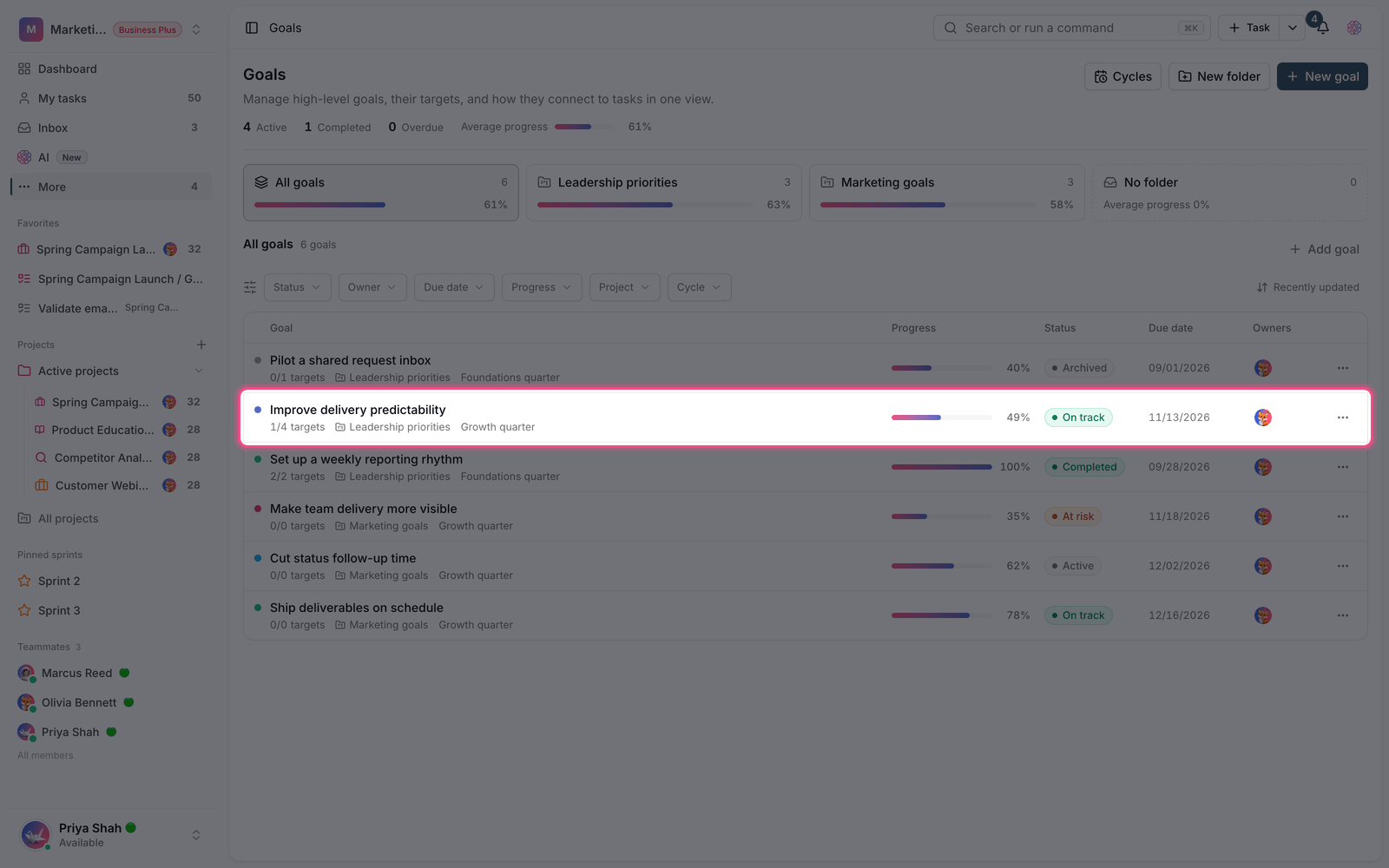
- Pending: not started yet.
- Active: in progress, with its targets being updated.
- At risk: progress is behind relative to the time left.
- Overdue: its due date has passed and it isn't complete yet.
- Completed: the outcome has been reached.
- Closed: ended without reaching the outcome.
- Archived: set aside from the active list, but not deleted.
Views and filters
The Goals page has two main views: Goals overview, for quickly scanning cards, and the full view, for seeing all your filtered goals side by side. Each card shows progress, owners, the due date and shortcuts such as edit and share.
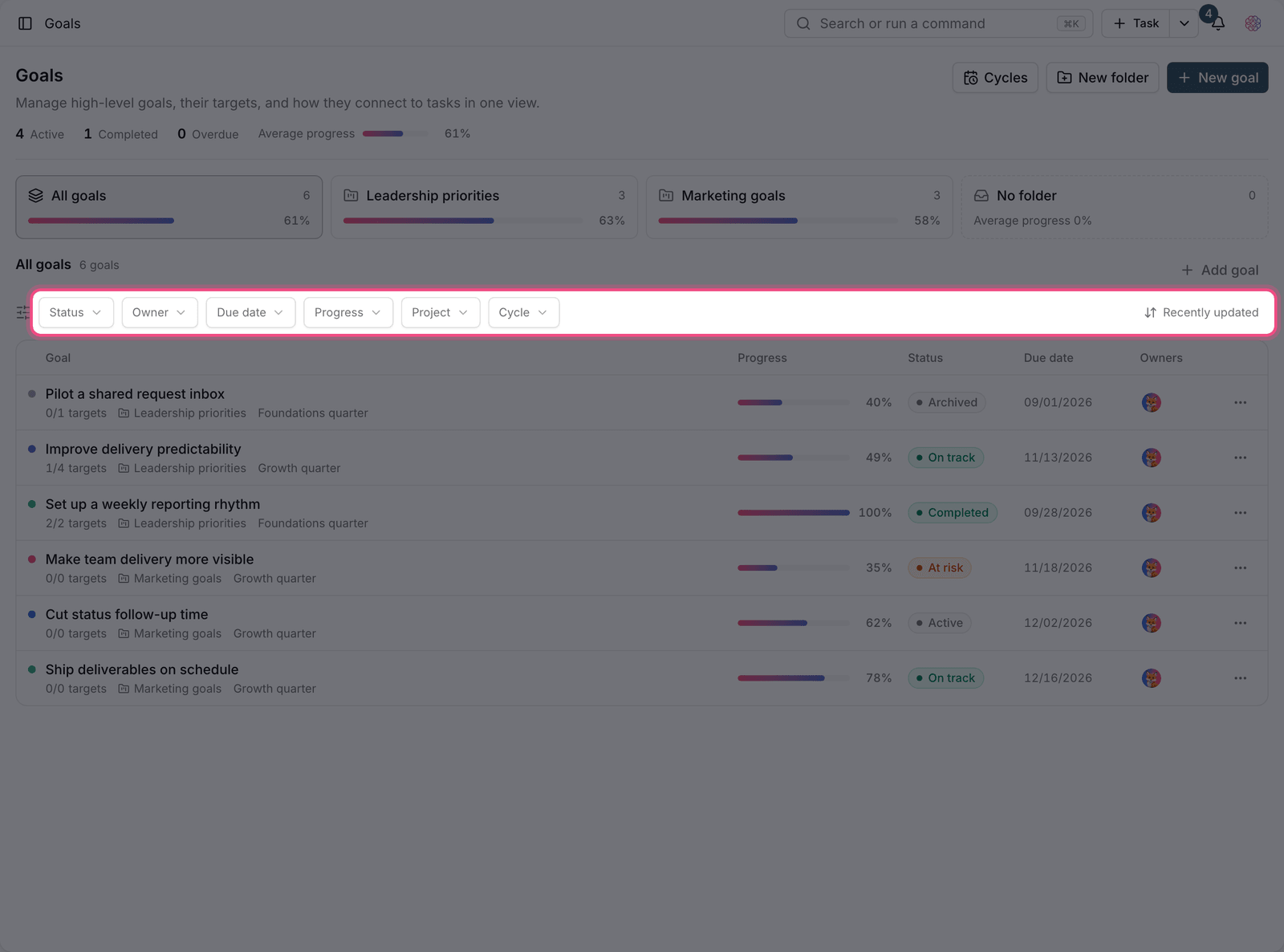
With filters, you can narrow goals by owner, status, project, cycle and progress range. The progress ranges — up to 24%, up to 49%, up to 74% and up to 99% — help you quickly spot which goals are falling behind.
What is a goal and what isn't
- A good goal: "Reach a 40% activation rate for new users" — an outcome measured with a number.
- A bad goal: "Run the spring campaign" — that's a project, not a goal.
- A task: specific work one person does. It can be linked to a target, but it isn't a goal itself.
- A milestone: an important date inside a project, not a measurable outcome.
Plan required: the number of active goals depends on your plan: Free 1, Pro 5, Ultimate 15, and unlimited on the Business plans.
To create your first goal, read Create a goal and its targets, and to organize your goals, read OKR cycles and goal folders.